
 Celiform
Premium Packaging Glossary
The words used when a premium box is specified, in plain language: box styles, inserts, finishes and the steps of a project.
Rigid Boxes
- Rigid Box
- A box built from thick, stiff board and wrapped in paper. It does not fold flat, so it keeps its shape, feels substantial in the hand and is often kept long after the product is used. Also called a set-up box or luxury box.
- Lift-Off Lid Box
- A base and a separate lid that lifts straight up. The slow lift is the classic premium reveal. Also called a two-piece box or telescope box.
- Book-Style Box
- A box whose lid is hinged along one side and opens like the cover of a book.
- Magnetic Closure
- Small magnets hidden under the wrap of a book-style box, so the lid closes with a soft, satisfying pull and stays shut without a ribbon or catch.
- Drawer Box
- A tray that slides out of an outer sleeve, usually pulled by a ribbon or a tab. Also called a slide box or sleeve box.
- Ribbon Pull
- A short ribbon fixed to a drawer or under an insert so the customer can slide the tray out or lift the product without reaching into the cavity.
- Wrap Paper
- The paper glued over the board of a rigid box. Textured and speciality papers set the colour and the feel of the box before any finishing is added.
- Printed Interior
- Printing on the inside of the lid or the base, seen only when the box is opened.
Inserts and Materials
- Insert
- The part inside the box that holds the product in place and presents it when the lid comes off. Also called a tray, fitment or cradle.
- Cavity
- The recess in an insert shaped to one item. A set has one cavity per item.
- Moulded Pulp
- Plant fibre pulp formed over a mould and dried into a rigid shape. Also called moulded fibre, pulp inserts or, in American spelling, molded pulp. See the moulded pulp guide.
- Wet-Pressed Fibre
- Moulded pulp that is pressed and dried between heated tools while still wet, giving a dense, rigid part with a smooth face and crisp detail. The kind used for premium packaging; sometimes called thermoformed fibre.
- Dry-Pressed Pulp
- Moulded pulp that is dried without heated pressing. Cheaper and quicker, with a rough, fibrous surface, thicker walls and softer detail.
- Single-Side Smooth
- A wet-pressed insert that is smooth on the face the customer sees, with a fine mesh texture from the mould on the hidden underside. The standard choice for most inserts.
- Double-Side Smooth
- A wet-pressed insert that is smooth on both faces, for parts that are lifted out, turned over or seen from both sides, such as clamshells and lids. It costs more because the mould is more complex.
- Clamshell
- Two halves joined by a hinge that close around a product, so it is held from above and below.
- Primary Pack
- The container that touches the product itself: the bottle, jar, tin or blister. A fibre insert holds the primary pack; it does not replace it.
Finishes
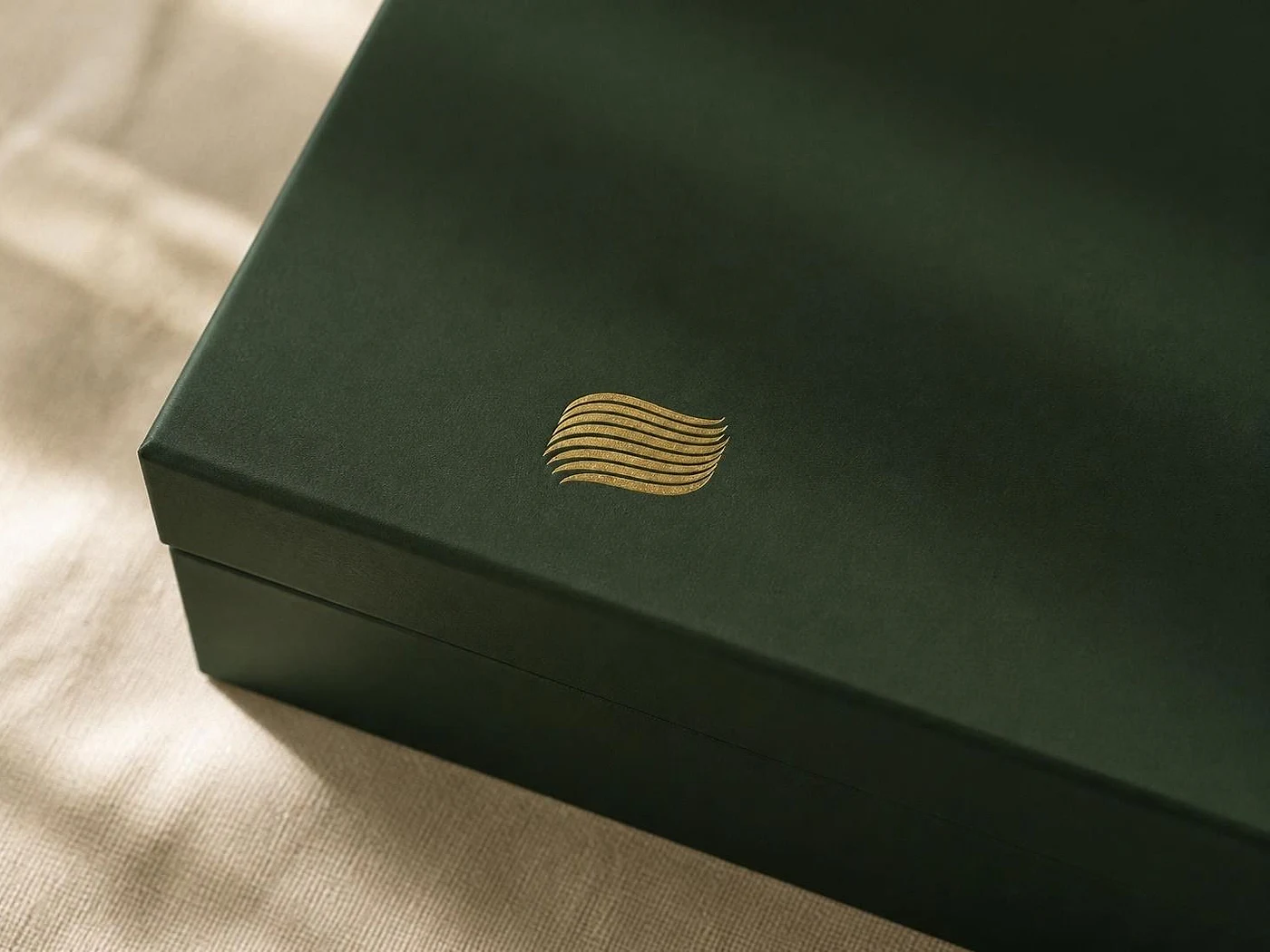
- Embossing
- A logo or pattern pressed up from the surface, so it stands raised and can be felt with a fingertip.
- Debossing
- The opposite of embossing: a logo or pattern pressed down into the surface.
- Foil Stamping
- Metallic or coloured foil transferred onto the surface with a heated die, often used for a logo in gold, silver or copper. Also called hot foil stamping.
- Spot UV
- A clear, glossy coating applied only to chosen areas, such as a logo, so they shine against a matte surface.
- Soft-Touch Lamination
- A thin film applied over a printed surface that gives it a velvety, matte feel. Matte lamination gives the same flat look without the soft feel.
- Printing
- Colour, pattern or text printed on the wrap paper or the inside of the box, specified per project.
The Project
- 3D File (.STEP or .IGES)
- A digital model of the product that lets the cavity be designed precisely. It speeds up design but is not required; dimensions or the product itself will do.
- Dimensioned Drawing
- The technical drawing of the insert and its cavities, with measurements, that you approve before anything is made.
- Tooling
- The moulds made for your insert. Because each insert is shaped to one product, the tooling is made for your project.
- Sample
- A physical insert made to your product before production, so you can test the fit, the finish and the feel. Production starts only after you approve it.
- Batch Inspection
- Checking each production batch against the approved sample before it is dispatched.
For how these fit together in a project, see How a Project Works. For the box styles and finishes Celiform offers, see Packaging.